Engineering Manager Diaries is my sharing of observsations as an engineering manager.
When I started out in this amazing industry, I brought you all the Junior Dev Diaries and then Senior Dev Diaries as I progressed through my software development career. I like to write as I learn and observe, so here are some thoughts as I move into the world of engineering leadership. I hope they help you with your own journey.
Here are the posts so far!
Engineering managers may be better positioned to adopt AI than expected. Why delegation, structure, and quality control matter more than prompts.
Most engineering teams are too busy for “nice-to-have” ideas to survive prioritisation. A Learning Backlog gives those ideas a safe home — optional, low-stakes, and focused on learning, not delivery.
This blog post is about relaxation and some mindsets I try to adopt when it’s time to switch off for the holidays — with mixed success, if I’m honest. Hopefully it helps you too.
Turn up, learn something useful, and get back to work. This shows how to keep a chapter healthy with a recurring slot, a rotating chair, no homework, three 20-minute talks, durable notes, and a simple cancel or postpone rule when the week is busy.
Some resources I’ve used while moving from software engineering to engineering leadership.
Over the years I’ve come to realise that TypeScript has not one but several learning curves to it. Here’s how I think about it.
A behind-the-scenes look at how I used ChatGPT to write my last blog post — from capturing raw conference notes to shaping the final narrative in my own voice.
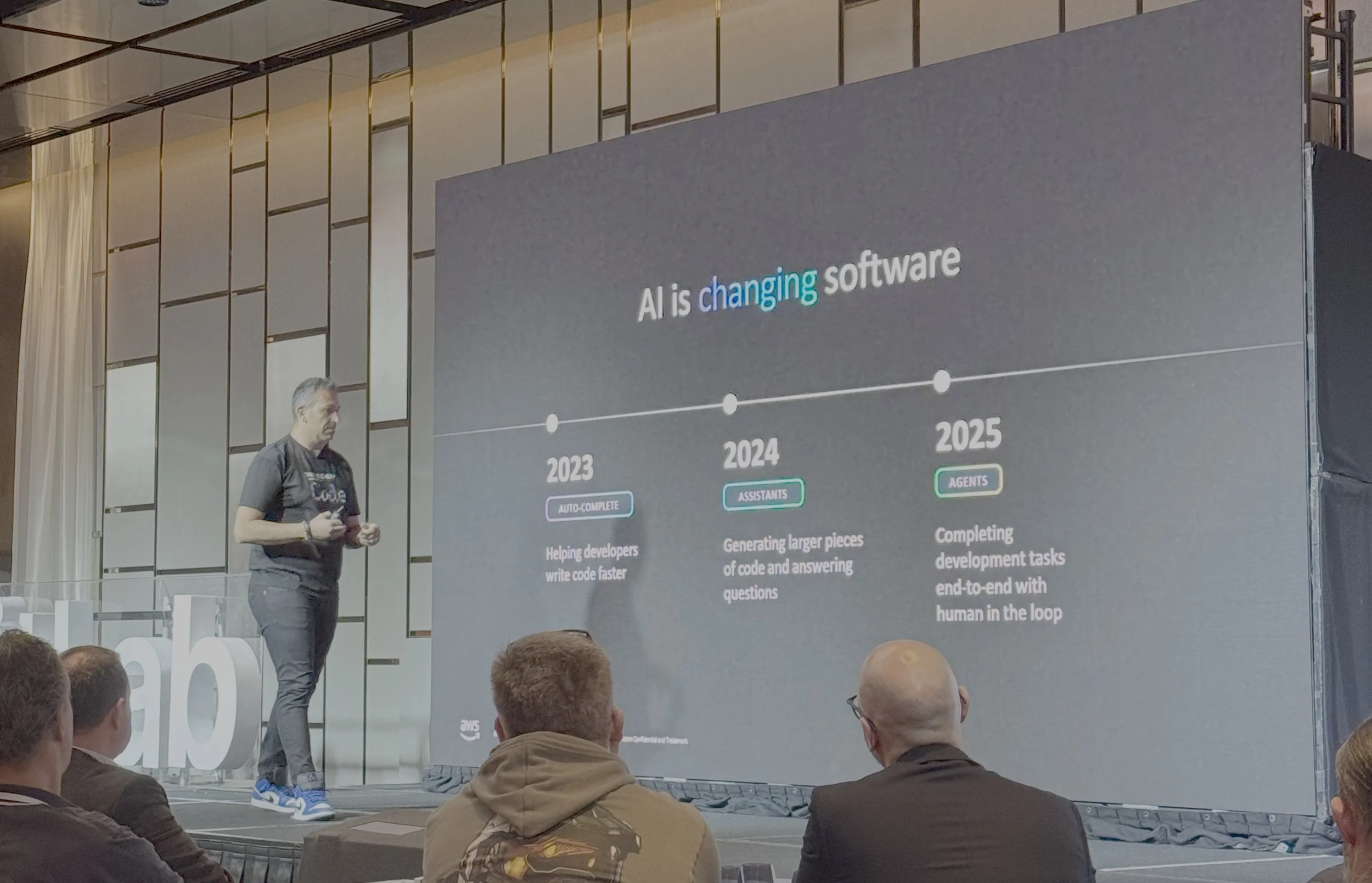
I went to GitLab Connect Sydney with two of my team leads to see where AI and software development are heading. Between sharp keynotes, public sector insights, and some honest demo moments, one thing's clear: agentic AI is moving fast — and we need to keep up.
Junior devs, don’t let AI do the heavy lifting—use LLMs as your coach, not your crutch. Learn why owning your code and mastering the basics still matter, even in an AI-powered world.
If you want to get more out of LLMs, think less like a typist and more like an engineering manager. Once code generation gets cheap, your leverage moves away from authorship and toward direction, judgment, and acceptance. The hard part is no longer making code appear. The hard part is deciding whether the output is correct, safe, and worth shipping.